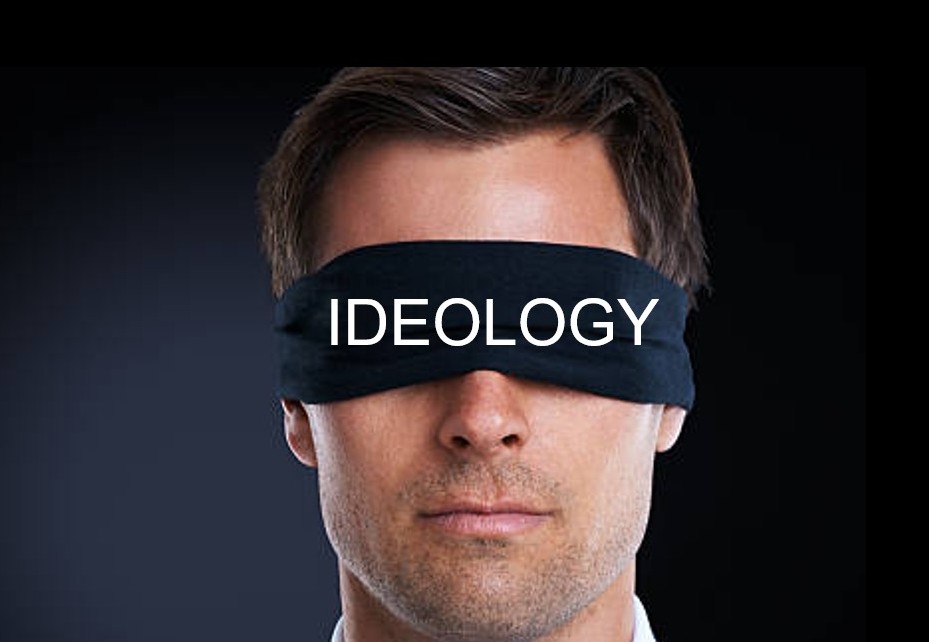
The Ideological Blindfold
by Howard Switzer GPNC
Conversing with Marxism
I have recently had an extended conversation with a fellow Green who embraces Marxism. The conversation was beneficial in that it pushed me to think more precisely about monetary reform and its relation to Green Party politics and Marxism. I have often said that I get along better with Marxism than I do with Marxists. This is because the Marxists I've met are fanatical in their embrace of ideology, like a religion. To be clear, they are not wrong about everything, but those I've met have adopted a rigid framework that seems to demand ideological compliance with the exclusion of any action that does not, in their view, solve everything all at once; that being a complete transition to socialism. Below is one of my efforts to bridge the gap between ideology and action for monetary reform:
Overproduction is real. Commodity production for profit is real. But the monetary system is also real, and it is the mechanism that turns those structural problems into destroyed lives.
We don't want to minimize its importance. Our main point remains: Monetary reform is the enabling condition for everything else we want to do. Without it, every serious proposal runs into "how do we pay for it?" With it, that question disappears. This matters strategically, we don't sound like "tax and spend" Democrats, or "cut the spending" Republicans.
We can work with some of your language changes. "Can and too often does" and "at least potentially" etc. as they reflect honest uncertainty about the future. But we need to be clear about why monetary reform matters.
I ask you: what single issue allows the Green Party to answer, "how do we pay for it?" without raising taxes, cutting programs or borrowing more? What single issue connects reparations, a Green New Deal, peace conversion, and public banking into one coherent campaign?
Monetary reform ends donor control over public policy and gives Congress the ability to fund public needs. Without it, we have good ideas and no money. With it, we have both. That is why it belongs at the center of our campaign, not as a footnote to the crisis theory, but as the enabling condition for everything else we want to do. Let's not lose sight of the strategic point: this is the issue that enables Congress to do its job instead of just serving their donors to get rich. Obviously, we need to elect a Congress that will do its job, and this is the issue that can inspire the nation to come together and elect one.
One more thing that you and most people ignore:
Changing the money system is not just an economic reform. It is a psychological one.
The current system runs on fear; fear of not enough, fear of falling behind, fear of debt crushing you. Usury institutionalizes that fear. It teaches us to hoard, to compete, to see our neighbor as a threat rather than someone to care for. Every major religious tradition condemned usury for exactly this reason: because a society built on interest-bearing debt produces fearful, isolated, grasping people.
Greening the Dollar (The NEED Act) flips that. Money created for public care, not private extraction, sends a different message: we are in this together. Scarcity is not a law of nature. It is a policy choice. We can choose abundance. We can choose to fund health, housing, education, and ecological restoration without first asking "how will we pay for it?"
You may call that sentimental. I call it the material conditions shaping consciousness, which is exactly your framework. Change the material structure of money, and you change what people believe is possible. Fear contracts. Love expands. That is not a small thing. Let's not pretend this is only about crisis cycles. It is about what kind of people we become.
Further, I still think you embrace a stunted view of what capitalism is. The word "capitalism" did not begin as a description of commodity production, free markets or private enterprise. Michael Sonenscher's research, published by Princeton University Press, confirms what I've written:
"Capitalism" was first coined in France in the early nineteenth century, and it began as a fusion of two distinct sets of ideas. The first involved thinking about public debt and war finance. The second involved thinking about the division of labor.
Capitalism began as a system of war finance, borrowing large amounts of money to fund the costs of war. That is the documented historical origin of the term. Sonenscher's book shows that thinking about the first set of ideas (public debt and war finance) has changed radically over time, with funding welfare eventually added to funding warfare. But the core connection between capitalism, debt, and state power was there from the beginning and still plagues us today.
History confirms how capitalists got nations to hand over their monetary authority. The basic structure of capitalist monetary systems originated in Europe during the 15th and 16th centuries through the gradual integration of privately organized banking networks with states' monetary authority. The mechanism was straightforward: In pursuit of domestic and geopolitical power, states borrowed from merchants, escaping the financial straitjacket imposed by the scarcity of precious metal currency. Loans to states were organized by a cabal of private bankers in return for being granted the lucrative monopoly to form 'public' banks like the Bank of Amsterdam, and later 'central' banks, like the Bank of England.
That is not conspiracy theory. That is the documented historical record. Private bankers lent money to states for war in exchange for the monopoly right to issue the money. This is the public-private partnership that is the origin of modern monetary systems.
As I have written before capitalism is the money system: capital (money) + ism (system) = money system. This means that the domination of raw materials, exploitation of labor and earth's resources, concentration of wealth, creation of poverty, destructive growth, predatory competition, and war, flows from and is amplified by the structure of the monetary system. As Frederick Soddy warned nearly a century ago, when you allow money "to become a source of revenue to private issuers, you create first a secret and illicit arm of the government and, last, a rival power strong enough ultimately to overthrow all other forms of government." Money is more about power than economics.
Capitalism is not free enterprise; this is an important distinction. Capitalism began as a system of war finance and grew into a debt-based monetary system that now dominates every aspect of economic life. Its central feature, the private creation of money as interest-bearing debt, is not a bug, it is the primary mechanism. Free enterprise and free markets are not the problem; they are what the debt system parasitically feeds upon. Abuse of the monetary system for private gain is the definition of usury, once condemned by every religious tradition as the sin of sins.
While capitalism literally means "money system" in its root etymology, you and others argue that capitalism refers to a mode of production, a social relation, rather than just the monetary mechanism. I am challenging that view because strategically it is a non-starter.
I stand with a long tradition of monetary reformers who understood that the money system is not a technical detail, it is the structure of power itself. Defining capitalism as the money system is strategically correct and accomplishes two things:
-
It demystifies capitalism. It stops being an abstract, inevitable force of nature and becomes a specific institutional arrangement that, being a matter of law, can be changed.
-
It makes monetary reform the central struggle. Capitalism is the debt-based monetary system and changing that system is not a reform within capitalism, it is the transformation of capitalism itself.
The NEED Act does not end what you call capitalism, it does not abolish the law of value, it does not guarantee socialism. What it does is remove the debt weapon that capital uses to discipline labor, extract wealth, and block every serious reform before it starts. That is not an "exaggeration." That is the description.
If you cannot agree that removing that weapon is worth doing, regardless of what comes after, then we have reached the limit of what theory can resolve. At some point, you either act or you don't. We want to act.
I hope you and others will support the BMRC in making this a strategic campaign. Either way, thank you for the rigor.

The Nature of Man and Money
Part 4: Needs and the Satisfaction of Needs
by Sue Peters GPNY
As the human child grows, they seek to satisfy new needs. The body of an infant develops over time. The child begins to control muscles to turn over, sit up, stand, and finally walk to explore this miraculous new world. Soon they are running, jumping, exploring everything.
Human society also grows to satisfy the needs of its citizens. First, the necessities of food, clothing, and shelter must be met. Then, with a division of labor, new crafts and then industrialization develop. Citizens are offered comforts: public transportation, higher education, hospitals, manufactured goods, etc.
But...look around. The U.S. today exhibits a vast concentration of wealth in a small part of the population, alongside much homelessness and poverty. What went wrong with the country's growth?
There is a man-made system that is the cause. Knowledge of this system was removed from the public school curriculum at the beginning of the 20th century. Removed on purpose. Because of this, I am going to ask you a question which you have never been asked before in your entire life. For that reason, it may sound silly or strange or uncomfortable. I encourage you to be curious. The question: Who creates the money we all need to satisfy our needs?
Some people say 'the government', but our government at all levels is in serious debt. Others reply 'I do when I earn it' or 'nobody — it's just there' or simply 'I don't know.' The ordinary citizen does not know because it was not allowed to be taught.
Let me explain a basic concept about money: the power to create money is found in federal law. Today, federal law gives the power to create money to private commercial banks. The law says the banks can create the money by a bookkeeping entry. Here is a simple summary:
Every time a private commercial bank makes a loan with a borrower, the bank has the legal power to CREATE the deposit in the borrower's account. The deposit is new money and adds to the money supply.
When I first recognized this bookkeeping in my job at a Wall Street bank, I asked myself: to whom are the banks giving loans and thus creating money? I answered: to multinational corporations, weapons manufacturers, wealthy financiers. This explains our vast concentration of wealth and ever increasing homelessness and poverty. When enough of us learn this 'secret of the banks', we will be able to change the system for a better life for all.
The Necessities of Life
A Basic Human Right?
by Ernest Wittenbreder GPAZ
Should government adopt a policy of making the necessities of life as inexpensive as possible?
What is the legitimate purpose of government? The Preamble of the Constitution indicates the intentions of the founding fathers. The relevant items specifically indicated in the Preamble are:
"insure domestic tranquility, provide for the common defense, promote the general welfare, and secure the blessings of liberty to ourselves, and our posterity."
Would promoting a policy of making the necessities of life as inexpensive as possible also promote the general welfare and secure the blessings of liberty to ourselves? Is having inexpensive or free necessities of life a basic human right? The United Nations Universal Declaration of Human Rights has been signed by every one of the 193 member states. Article 25 of the Declaration says:
"(1) Everyone has the right to a standard of living adequate for health and well being of himself and his family, including food, clothing, housing and medical care and necessary social services, and the right to security in the event of unemployment, sickness, disability, widowhood, old age or other lack of livelihood in circumstances beyond his control.
(2) Motherhood and childhood are entitled to special care and assistance. All children, whether born in or out of wedlock, shall enjoy the same social protection."
Franklin Delano Roosevelt (FDR) also weighed in on the issue of the costs of the necessities of life in his 1944 State of the Union address, in which he called for an Economic Bill of Rights:
"It is our duty now to begin to lay the plans and determine the strategy for the winning of a lasting peace and the establishment of an American standard of living higher than ever before known. We cannot be content, no matter how high that general standard of living may be, if some fraction of our people — whether it be one-third or one-fifth or one-tenth — is ill-fed, ill-clothed, ill-housed, and insecure.
This Republic had its beginning, and grew to its present strength, under the protection of certain inalienable political rights — among them the right of free speech, free press, free worship, trial by jury, freedom from unreasonable searches and seizures. They were our rights to life and liberty.
As our nation has grown in size and stature, however — as our industrial economy expanded — these political rights proved inadequate to assure us equality in the pursuit of happiness.
We have come to a clear realization of the fact that true individual freedom cannot exist without economic security and independence. "Necessitous men are not free men." People who are hungry and out of a job are the stuff of which dictatorships are made.
In our day these economic truths have become accepted as self-evident. We have accepted, so to speak, a second Bill of Rights under which a new basis of security and prosperity can be established for all — regardless of station, race, or creed.
Among these are:
-
The right to a useful and remunerative job in the industries or shops or farms or mines of the nation;
-
The right to earn enough to provide adequate food and clothing and recreation;
-
The right of every farmer to raise and sell his products at a return which will give him and his family a decent living;
-
The right of every businessman, large and small, to trade in an atmosphere of freedom from unfair competition and domination by monopolies at home or abroad;
-
The right of every family to a decent home;
-
The right to adequate medical care and the opportunity to achieve and enjoy good health;
-
The right to adequate protection from the economic fears of old age, sickness, accident, and unemployment;
-
The right to a good education.
All of these rights spell security. And after this war is won we must be prepared to move forward, in the implementation of these rights, to new goals of human happiness and well-being.
America's own rightful place in the world depends in large part upon how fully these and similar rights have been carried into practice for our citizens."
When FDR spoke these words, those economic truths had become accepted as self-evident, but those economic truths are no longer accepted as self-evident.
At the time that FDR spoke these words the US was fighting WWII. The US had just emerged from the greatest economic collapse in the history of the modern world, the Great Depression. FDR is credited with the political economic policies that enabled both a high level of wealth growth and a fairer distribution of that wealth. In the period leading up to the Great Depression the US was experiencing the greatest level of wealth inequality in the history of the world up to that point. During the 1920s, the stock market experienced enormous rates of growth. The top incremental income tax rate was 25%, even lower than the current top incremental tax rate. It was a period in which labor unions were growing because workers had discovered that the only way they could gain a living wage was to organize and demand higher pay. At the time of the Great Depression, roughly 35% of American workers were members of labor unions. When FDR came to office in 1933 the unemployment rate was 25% and tens of millions of Americans were ill-fed, ill-clothed, ill housed, and insecure.
During the 1930 and 1932 elections the labor unions supported Democrats who promised economic reforms and recognition of the economic rights of all citizens. FDR and the Democrats raised income tax rates which provided funding for good paying government jobs for 10s of millions of people, building housing, roads, bridges, public libraries, public schools, public hospitals, and public parks. An economic social safety net was established with welfare programs, social security for the elderly and disabled, and unemployment insurance. Although FDR did not start any new wars, he recognized the need for a strong national defense to prepare the country for the possibility of a war. As a result of the New Deal, the necessities of life became readily attainable for all Americans.
The vision that FDR had for America's future was abandoned over time by his successors. In 1945 the top incremental income tax rate for individuals was 94%. The corporate tax rate was 40%. During the war, a 30% excess corporate profits tax was imposed so that most corporations paid 70%. Because of a high personal tax exemption, most workers paid the 3% payroll tax but no income taxes. Real estate property owners paid a tax to cover education and other local government expenses. State governments received block grants from the federal government. Most states had no income or sales taxes until the 1960s following federal income tax cuts that mostly benefited wealthy campaign contributors. In the first few decades following WWII, most families had a single wage earner. Most married women did not work outside the home and most families owned their homes, which they typically could afford to purchase in their 20s. From the 1930s to the 1960s, a much higher percentage of the workforce were members of labor unions compared to now and there was a much higher level of civic engagement, such as Rotary, Kiwanis, Lions clubs and volunteer fire departments.
The failure of FDR and the New Dealers is that they did not go far enough with economic and political reforms. The gains of the working class were not preserved and were, in fact, reversed over time. The Labor Management Relations Act of 1947 (Taft Hartley Act), which Truman called the "slave-labor bill" was vetoed by Truman but his veto was overridden with bipartisan support in Congress. Nothing was done about the wealth inequality that enabled wealthy individuals and corporations to buy the political, educational, and media (propaganda) establishments, thereby guaranteeing that ordinary working people will have no acceptable choices in the political process. Mark Twain made the following observation:
"If you don't read a newspaper, you are uninformed. If you do read a newspaper you are misinformed."
Today that misinformation also comes from radio, television, and the internet. Our mainstream media outlets create a narrative that misinforms for the purpose of political control. We don't hear much from our mainstream media about the unfairness of our private banking system that allows private bankers to create money out of thin air as interest-bearing debt for private profit, rather than giving control of money to the US Treasury for legitimate public purposes. This represents a extraction of wealth from the many to the few with every transaction. We hear nothing from our mainstream media about the unfairness of our tax laws. During FDR's tenure, higher maximum tax rates on wages, salaries, and corporate incomes provided the money to fund New Deal programs, but they did not have a large effect on wealth inequality or political corruption. Inheritance taxes helped reduce wealth inequality to some extent, but inheritance taxes have since been effectively eliminated.
Most of the nation's wealth was not taxed then and is not taxed now. Wealthy individuals only pay taxes on their salaries, wages, real estate, and dividends, which are typically a very small fraction of their total wealth. For multi-billionaires who own a corporation, most of that individual's wealth is the stock in the company or companies they own. Their wealth is not taxed until their stock is sold. When stocks are sold the capital gains are taxed at a much lower rate than labor. Billionaires can support their lavish lifestyles by borrowing against their stock holdings, which does not require the payment of any income tax. Multi-billionaires may have a million times more wealth than an average citizen but pay a very tiny fraction of their wealth in taxes.
A highly graduated tax on excess net assets would reduce wealth inequality and provide money for the genuine needs of the working class. A highly graduated wealth tax might begin with a 10% rate for net assets in excess of 1000 times median income and increase to a level of 60% or more for net assets in excess of 1 million times median income. If we had such a wealth tax, the payroll tax could be eliminated and a personal income tax exemption with a high threshold could be established.
Is providing for the needs of all people a legitimate role of government? If government provided for the basic necessities of life for everybody why would anybody want to work? We should all ask ourselves these questions. I think the answers are self-evident. The large majority of people want much more from life than survival. Most people have a sense of purpose and want to make positive differences that make the world a better place.
For wealthy investors, owning and renting the necessities of life has become a profitable business model. There will always be demand for the necessities of life, especially when they are in short supply, as they are now. In the past decade, corporations have been buying single family homes, condos, and apartment complexes. Housing prices and the number of homeless people has skyrocketed. If the government funded housing projects, the price of housing would decline, and more working-class people could afford to own a home. If more homes were built the homeless population would decrease. We are becoming a renter society according to the government's plan.
If we are to be a country in which wealth is broadly based and the necessities of life are inexpensive, then we should plan to be an ownership society wherein most people own their businesses, in whole or in part, and can afford to own their own homes at a young age. We should favor worker-owned and self-directed (one worker one vote) enterprises with lower tax rates over corporations. What do you think would be the likelihood that a worker-owned and self-directed enterprise would want to lay off all the owners/directors and move to Bangladesh or El Salvador? Would a worker-owned and self-directed enterprise respond to labor saving automation enhancements by firing 2/3 of the owners/directors or would they spend the savings on expanding the business into new products and increase worker/owner compensation and benefits.
Our government is not responsive to the needs of its citizens. Elected officials only respond to the wishes of their donors. He who pays the piper calls the tune. We have elections, but we don't have democracy. We will not have democracy until we have electoral choices that represent the interests of people who work for a living. The path forward must include ranked choice voting at all levels of government in all elections so that voters are not faced with having to vote for the lesser of two evils. We must reverse the Citizen's United Supreme Court ruling. We must have open debates that include all the candidates on the ballot. A system of campaign funding such as Democracy Dollars where each voter is annually given the same number of Democracy Dollars to support the campaigns of candidates who represent their voter's interests. Democracy Dollars can only be used for legitimate campaign expenses. Any campaign contributions not spent on campaigns must be returned to the US Treasury. Bribery must be defined as any money contributed to a political candidate outside the Democracy Dollars system. Voters should also be given Media Money to support investigative journalists who report on political activities and voting records so that voters can exercise their votes with the information they need to make fully informed choices.
The 14th Amendment to our Constitution requires "equal protection of the laws" and provides Congress with "the power to enforce, by appropriate legislation, the provisions of this article." We can achieve equal protection only by establishing democracy free of influence by large campaign contributions (bribes) provided by wealthy special interests. People who are ill-housed, ill-fed, ill-clothed, and insecure will not support a political economic system that ignores their basic needs. Adopting policies that make the necessities of life easily affordable will provide more true individual freedom, economic security, and independence for the large majority of the population.
Call to All Citizens:
Go to your local government and get to know them
by Sue Peters GPNY
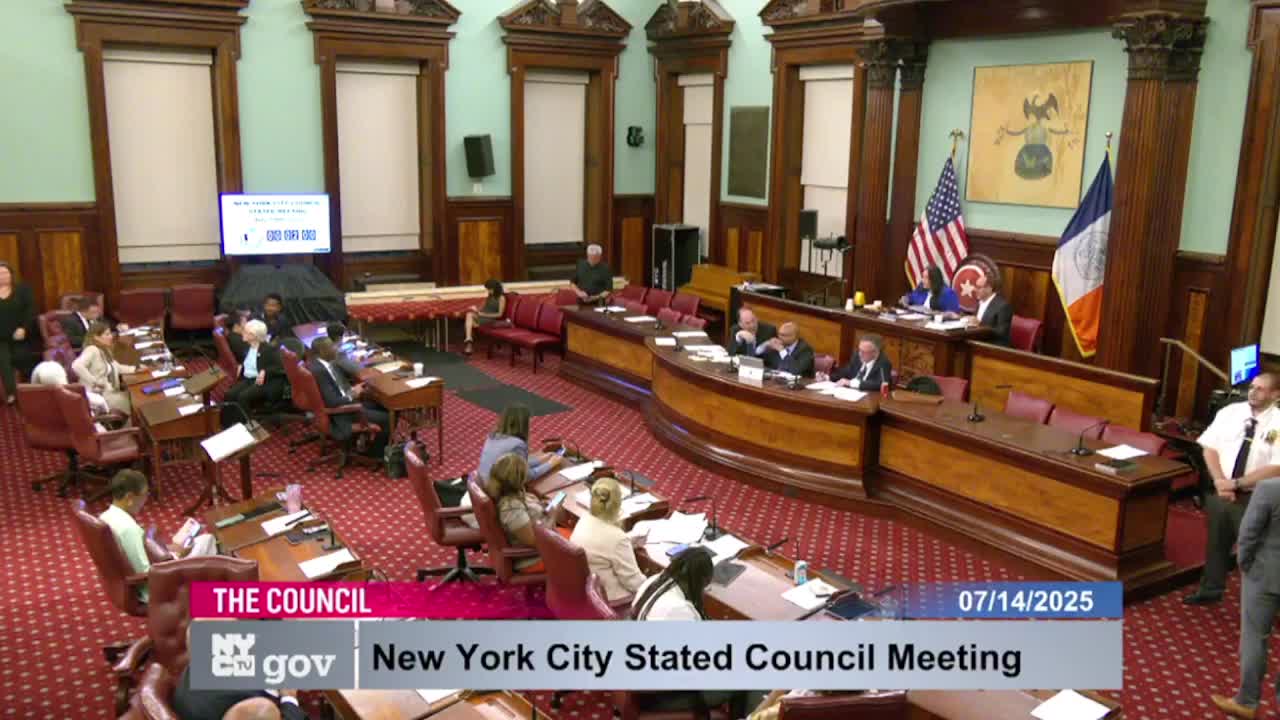
I live in New York City and will be going to City Hall to give a 2-minute public talk to the Committee on Finance. My topic will be: "Citizens need to know the nature of our money system. It's too important to be hidden from them." An automobile cannot run without fuel and a social and economic system cannot operate without money, the means of exchange.
But, our money has been given away to private commercial banks. "What do I mean by THIS?!" Specifically, all our money — all the money people earn and spend and save — starts in a bank. "What do I mean by THAT?!" It will be a brand new thought for our elected representatives to be asked: who creates all the money our citizens need to live?
This money has to come from somewhere. Someone has to have the authority to create it and enter it into circulation. Think about that for a while. It's a new thought, so let it simmer inside your head. Many people reply in these ways: 'the government creates it' or 'I don't know' or 'I never have thought about that."
No, the government doesn't create our money. Proof of this is today's federal debt of 39 trillion dollars! If the government created money, there would be no federal debt. And of course, people have never asked themselves this question because the private mechanism of money creation is purposefully kept out of our education and media.
Here's the answer. The power to create our money was given away by Congress in 1913 in the Federal Reserve Law to private commercial banks, like JP Morgan Chase or Bank of America. U.S. banking law permits the bank to make a bookkeeping entry into the checking account of a borrower. Yes! All the bank has to do is make a bookkeeping entry, and POOF! New money is in a checking account, and the account owner (the borrower) can write checks and spend this money.
More to think about: 1) the bank gets interest on all our money that they create. 2) the bank decides who gets this money because they decide to whom to grant their 'loan' 3) if the banks decide to stop giving loans and past loans are paid off, our country goes into recession … or depression if it goes on too long.
Be curious. Seek knowledge of this system in books like the 32-page Monetary Reform Manual from the American Monetary Institute[1] or a talk from past Congressional Representative Dennis Kucinich.[2] When you have a grasp of the history and a grasp of the system, go to your local government and seek to educate them. Your local government is likely in debt and might be interested to know why. It might explain a thing or two.
1. Monetary Reform Manual
2. The Key to Economic Recovery; Kucinich Explains Monetary Reform