Any government that does not control its money is controlled by those who do.
The Evolution of Money
by Howard Switzer GPNC
Building the Architecture of Trust
The origins of money are rooted deep in human history, what some would call prehistory. Before there was money as we know it, before banks, before interest, before debt, there was something older, something sacred.
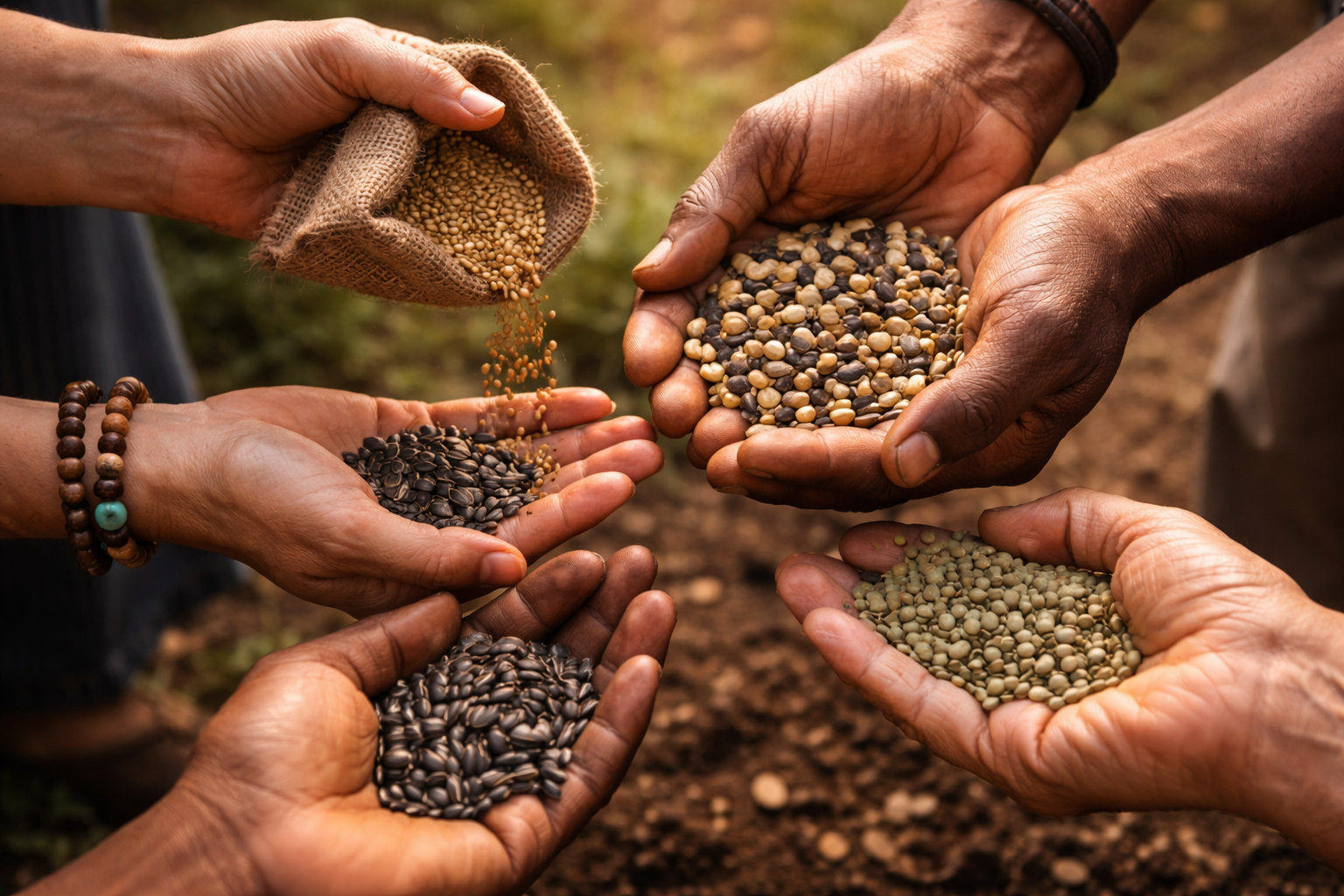
For countless generations, indigenous peoples understood that the gifts of life, water, soil, food, shelter are not commodities to be owned. They are gifts from the living Earth, the Great Mother, and when one receives a gift, one gives in return.
This is the sacred ethic of reciprocity, the "golden rule," a central tenet of nearly every religion. This was money in its deepest sense: not an instrument of accumulation, but a gesture of relationship. A way of saying: I am part of this circle of life. I receive, and I give. We belong to one another.
Over centuries, however, money changed, and with it the psychology of the culture. Money was separated from its sacred roots and became something else entirely.
Money isn’t just an economic tool. It is a cultural artifact. It influences how people interact, what they value, and even how they define success. It shapes who we become. Conversely, culture dictates how money is created, spent, and discussed. Understanding this relationship helps explain everything from spending habits to global economic disparities.
Systems are never neutral. They reward certain behaviors and punish others. In the dominant system today, all the money is created by the big commercial banks owned by a global banking cartel. The system consists of central bank interfaces in all the nations within the network headed by the Bank of International Settlements (BIS), the central bank of central banks. The entire system enjoys immunity from prosecution. Any nation that refuses to be part of this system is targeted for destruction. Iraq, Libya, Syria and now Iran are recent examples.
The banks control the creation and allocation of all the money as interest-bearing debt in the process of making loans consisting of the principal, created as a deposit to be paid back with interest. Every new dollar comes into existence as interest-bearing debt. As the principal of the loan is paid off, that money is deleted from the system while the interest, which must come from the principal of another loan, goes to pay banking expenses and profit the bank owners.
This is the economic growth imperative as society competes to pay interest on its debts and not lose their collateral. Those interest costs are also accumulated and embedded in the prices of everything we buy, 50% on average.
However, when loan payments (money deleted) exceed loans being made (money created) the system crashes into recession or depression for lack of money and loans default. This has been called "the business cycle" but is more a monetary/finance system cycle. This may be by design as banks can crash the system just by not lending. When the system crashes, this allows another transfer of wealth from the many who create it to the few who accumulate it. The real wealth collateral from the loan defaults can then be picked up for pennies on the dollar, further concentrating wealth to the top where it can be used for more power and control for profit.
This is why nations need to reclaim their monetary systems from the private banking system. The system is structurally designed to extract and accumulate wealth for the owners. Scarcity is not accidental. It is structural.
A system built on debt cultivates anxiety. It rewards extraction over generosity. It turns neighbors into competitors. This is not a failure of the system. It is the system operating exactly as designed.
There is another way. What if money were created not by private banks for private profit, but by public institutions accountable to the people? What if money was created not as debt to be repaid with interest, but as a permanently circulating asset issued exclusively for public purposes: education, infrastructure, care, the restoration of the living world?
Such a system would not solve every problem. But it would make solving them possible. Such a system could fund every solution based on the truism that anything physically possible, ecologically wise, and socially desirable is financially feasible.
Structures shape character. A system that rewards extraction cultivates greed. A system that rewards cooperation cultivates trust. This is not idealism. It is architecture.
Just as a bridge must be designed to bear weight, an economic system must be designed to support human flourishing.
When the structure of money aligns with the principle of sacred reciprocity, when it enables care rather than punishing it, virtue becomes possible. Not guaranteed. But possible.
Consider what a fear and debt-based system does to the human psyche. Debt is not merely financial. It becomes internalized: a sense of inadequacy, of never being enough, of being perpetually behind, a slave mentality. Debt is a form of slavery.
A public asset system would not eliminate all anxiety. But it would remove the structural source of chronic, systemic insecurity. It would create conditions in which trust can be cultivated, rather than perpetually undermined by a system seeking profits at any cost.
Around the world, communities are rediscovering this wisdom. From participatory budgeting in Brazil to cooperative finance in Kenya, from sovereign money proposals in the U.S. and Europe to indigenous-led economic revitalization across the Americas. People are remembering that money can serve life. These are not utopian experiments. They are practical, grounded, and growing. They are proof that another way is not only possible, but it is also emerging.
Like it or not, money is the governing factor, and this is why it must become a public trust. The evolution of money is not complete. We are living in a moment of choice. One path leads to more of what we have now: anxiety, division, extraction, more surveillance and control. More violence and war. The other leads toward something older, but new to us: money as a public asset, a tool of relationship, a foundation for trust.
Monetary reform does not fix every problem. It just makes fixing them possible.
The system we have was made by human decisions. A new system can be made the same way, by decisions rooted in justice, genuine dialogue, and the recognition that we are one human family.
What we build, shapes who we become. We have a choice now to begin building the world we all want and become the people we want to be. We can create the world we love.
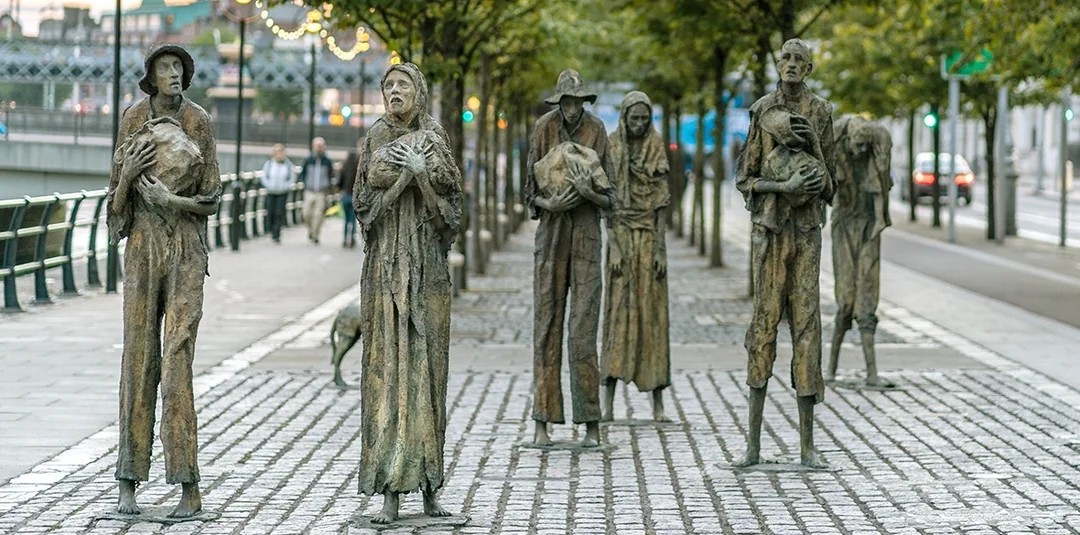
Monument to the Victims of Capitalism — Dublin
Victims of Capitalism Day
by Rita Jacobs GPMI
It started as a joke, but in giving it more thought, it really is not funny. In thinking about a special day or event that would cause more interest in monetary reform (primarily how money is created and entered into circulation), I was thinking about all the designations of special days that are devoted to victims of various crimes. I suggested that April 15 be designated as Victims of Capitalism Day. I chose that date because there is a connection between capitalism, creation of the Federal Reserve System for banking, and the passage of the law that requires income taxes to be paid by citizens and corporations.
And why would April 15 be appropriate? That is the day by which most Americans need to file their annual income tax returns and make sure that they have paid the income taxes that are required by the Internal Revenue Code. And why do we have an income tax in the first place? It’s very interesting to read the reason given by the AI from Google in answering that question.
"The federal income tax was established in 1913 following the ratification of the 16th Amendment primarily to shift the tax burden onto the wealthy, replace declining revenue from high tariffs, and fund an expanding federal government. It was driven by Progressive Era reforms designed to "soak the rich" and move away from regressive taxation that heavily burdened working-class consumers."
In retrospect, the real reason according to critics of Congress was that Congress wanted to make sure there was enough tax collected to run the Federal government after they passed the Federal Reserve Act of 1913. Why was that? That should not have been necessary since the Constitution in Article I, Section 8 specifically grants to Congress the power of creating money. Obviously, there was some kind of perceived necessity for an income tax. Perhaps the banks wanted to ensure that the annual interest payments on the federal debt they were about to create would be paid.
The Federal Reserve Act, enacted a few months after the income tax, included provisions for the creation of new money — specifically granted to the banks through the creation of new money when making loans. So, any new money in circulation depended on the banks making loans. Unfortunately, the money created on the books for the loans is removed from the books as the principal is paid off. But there was no provision in the law for removal of the interest from the books. The interest granted to the banks was a gift from Congress. I have always envisioned this to be like the government giving a bank a house to rent out for 20 or 30 years, without the bank ever having to buy or pay for the house and its maintenance. This was a tremendous legislative "gift" to the bankers. The law has remained like this for more than 112 years. It is no wonder that the bankers control everything. They have plenty of money to contribute to the re-election of their favorite candidates to send to Washington to continue increasing their own wealth.
Capitalism is generally defined as an economic system in which the means of production are privately owned. This results in extreme personal wealth in some instances. The banks control to some extent those who receive favorable loans. Banks often invest in corporations that are performing well economically and have bankers serving on their boards of directors. This gives banks more of an opportunity to benefit financially from the system of capitalism.
Originally the income tax was passed to tax the excess of $3,000 per year earned by individuals at a rate of 1%, with higher rates of tax imposed on corporations. In 1913 most individuals were excluded from the tax. It is obvious that much has changed since we are now experiencing very low wages paid to employees, and excessive wealth and hoarding of profits by very wealthy individuals and corporations. And since Congress gave up its obligation to create money as granted by the Constitution, we now have an extreme situation whereby the government debt has reached $39 trillion dollars, which is more than the government can comfortably pay interest on. And we have higher income tax rates that affect individuals, as the corporate income tax rate continues downward.
Capitalism has caused the wealth inequality to reach its highest level. In 2024, homeless response workers served more than 1.1 million people in need, a 12 percent increase from 2023. That percentage continues to climb, especially since housing has been bought up by big corporations, with the end game of huge profits from the rental and sale of housing. And other millionaires and billionaires are investing in farmland across the United States. It is obvious that capitalism has not benefited the majority of the population of the United States, and has left most of the population as its victims of a capitalism system that was never intended to benefit the American people.
Monetary Sankofa
by Howard Switzer GPNC
How an ancient wisdom tradition illuminates the choice between extraction and reciprocity.
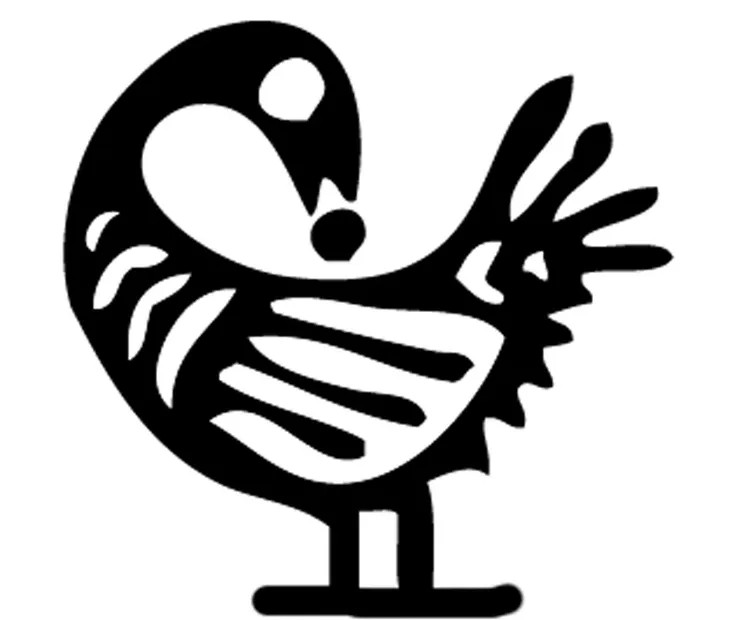
Sankofa is a wisdom tradition originating among the Akan people of Ghana. It is often represented by a bird looking backward. The symbol carries a profound teaching:
"It is not taboo to go back and fetch what you forgot, we must look back to move forward. We must think back to where we took the wrong path."
This is precisely what we're exploring when we trace money back to its sacred roots. We're not proposing a naive return to some imagined premodern past. We're retrieving wisdom that was lost, or deliberately suppressed, so that we can build something new from it.
Two Paths, One Choice
The choice between the two paths is not abstract. It is made every day: in how we spend our time, our money, our attention; in what we advocate for; in what we build together.
While many may not see them yet, we have two paths, one choice. One path continues the trajectory of the last several centuries: money as private interest-bearing debt, as extraction, as a technology of concentrating private accumulation. The other path, informed by the past, leads toward principles that have sustained human communities for millennia: reciprocity, public purpose, relationship.
Sankofa teaches us that the past is not a place to get stuck. It is a source of wisdom. The bird's feet are planted forward. The head turns back to retrieve what is valuable. Then it moves ahead, carrying that wisdom into the future.
This is what monetary reform looks like when viewed through a Sankofa lens. We are not trying to dismantle modernity and return to gift economies (though we have much to learn from them). We are retrieving the principles that made those systems sustainable: trust, reciprocity, the understanding that money is ultimately a social relationship, not a thing. And it affects who we are. We are applying those principles to the scale and complexity of the present.
What Was Forgotten?
We forgot that money, in its origins, was a tool for relationships, not accumulation. We forgot that the power to create money is supposed to be a public power, perhaps the most fundamental public power there is. Perhaps the most vital prerogative of democratic self-governance.
We forgot that systems built on perpetual debt create not just economic inequality but spiritual and psychological damage: anxiety, competition, a sense of there never being enough, and its persistent violence.
We forgot that there were alternatives. Throughout history, communities have issued their own currency. Governments have created debt-free money for public purposes.
Indigenous economies operated for millennia on principles of reciprocity that did not require perpetual growth or interest-bearing debt.
This forgetting was not accidental. It was the result of centuries of colonization, of the enclosure of common lands, of the concentration of monetary power in private hands. The history of money is also a history of dispossession.
Sankofa is remembering, not as an academic exercise, but as an act of liberation.
What We Carry Forward
So. what does it look like to retrieve this wisdom and carry it forward?
It looks like communities reclaiming the power to direct public funds toward public purposes, affordable housing, renewable energy, community infrastructure, without incurring debt or extracting profit for private shareholders.
It looks like participatory budgeting, where ordinary citizens directly decide how public money is spent, transforming both the built environment and democratic culture.
It looks like indigenous-led economic and ecologic revitalization across the Americas, from the Onondaga Nation's efforts to reclaim stewardship of their traditional territory to the many cooperative enterprises rooted in indigenous values of reciprocity and collective responsibility.
It looks like a movement for sovereign money proposals gaining traction across the U.S. and Europe, arguing that the power to create money from nothing, should belong to the public, not to private banks, a public trust, not a private scam.
These are not nostalgic projects. They are experiments in building something new from something old. They are Sankofa in action.
The Circle Restored
The circle is a universal symbol: the cycle of seasons, the flow of gifts, the interdependence of all life. In Akan philosophy, Sankofa is sometimes represented not only as a bird but as a spiral, a path that returns to where it began, but at a higher level of development.
This is the shape of genuine transformation: not linear progress, which too often means forgetting, but spiral movement, which means remembering as we move forward.
The Choice, Revisited
We are living in a time of choice. The path of extraction and debt is not inevitable. It was created by choices made over centuries, and it can be changed by choices made now.
Sankofa reminds us that the wisdom we need is not entirely new. It is old, older than the dominant system that tells us there is no alternative. But it is also alive, being rediscovered and adapted by communities around the world.
The question is not whether we can build something different. We already are. The question is whether we will do so consciously, intentionally, at scale, carrying forward what we have retrieved from the past.
The system we build will shape who we become. The bird that looks back knows this. It knows that to move forward without remembering is to risk repeating the mistakes of the past. And it knows that to remember is not to dwell, but to retrieve, to gather up what is valuable and carry it into a new day.
There is a reason the image of two paths resonates across cultures. In Greek mythology, it is the choice of Heracles between virtue and vice. In Buddhist tradition, it is the Noble Eightfold Path. In indigenous traditions around the world, it is the choice between living in balance and living in extraction.
The evolution of money, seen through this lens, is not a story of linear progress. It is a story of forgetting and remembering, of rupture and restoration, of a circle fracturing and being remade whole again. And it is a story still being written, by all of us, in the choices we make about how we structure our economies, our communities, and our relationships.
Lets build the world we want and be done with the greed and violence of empire.
To allow money to become a source of revenue to private issuers is to create, first, a secret and illicit arm of the government and, last, a rival power strong enough ultimately to overthrow all other forms of government.
– Frederick Soddy
Our current monetary system is institutionalized usury.
Usury:
The abuse of monetary authority for personal gain.
The great religions and philosophers condemned usury.
Dante described it as
An extraordinarily efficient form of violence by which one does the most damage with the least amount of effort.