Part 2: The birth of Man and Money
by Sue Peters GPNY
Series Title: The Nature of Man and the Nature of Money
The mother of an infant seeks the sweet joy of giving to a new life. The infant seeks the satisfaction of needs met for food, warmth, tenderness. Both mother and infant are getting their human needs met.
At a higher level, an economy should meet the needs of all people. An economy exists to satisfy the needs of the population for food, shelter, clothing, education, healthcare, etc. The government is there to ensure the economy is working for everyone, and that means distributing income — to raw material producers, manufacturers, distributors, retailers, etc. – so all people, whether owners or workers, can live a satisfactory life and contribute to their communities.
This fair, balanced economy is called a par economy — par for parity or 'balance'. It is a natural law, but can be manipulated by greedy forces. Throughout human history, these 'greedy forces' have been private bankers. When private individuals gain control over the issuance of a country's money, people suffer, wealth concentrates, wars are financed, and civilization goes into decline. For example, the creation of the privately-owned Federal Reserve System in 1913 was responsible for financing World War I, creating the 1920's stock market bubble, and causing the 1930's Great Depression.
"How? … what?" you yell. "My checking account deposits are put there by working my job. The government creates the money, and I get my part when I work."
Americans are not taught the nature of our private money system. The public thinks the U.S. government creates our money. This is a lie allowed to be held by the public, because the truth would cause people to realize their enslavement by private parties.
What is not taught to Americans, from kindergarten to university, is the secret of the banks: every time a private commercial bank signs a loan contract with a borrower, the bank 'creates the deposit' in the borrower's account. The money supply is increased. Every time the borrower pays down the loan, money is 'destroyed' or wiped off the books of the bank. The money supply is decreased.
Private bankers run the world with this power: siphon interest every day from the entire money supply they have created out of debt; create crises such as inflations, deflations, wars; concentrate wealth; influence Congress. Do you need more?
As Aristotle wrote in Politics: "Men called bankers we shall hate, for they enrich themselves while doing nothing."

Trump's New FED Chair
To Take Office in April, 2026
by Eugene Woloszyn GPFL
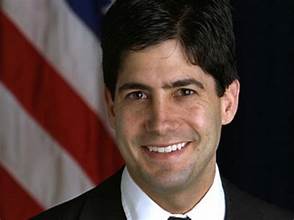
On 1-30-26, Trump announced his long anticipated choice.
KEVIN WARSH is a youthful age 55, meaning he could be in place for 10 to 15 years. Warsh married the heir to the Estée Lauder COSMETICS FORTUNE in 2002. Jane Lauder is a long time executive at the company & Forbes estimated her wealth at $2 billion in 2017, which should be much higher today. Jane Lauder's father is a long time adviser, insider, & financial big donor to Trump campaigns.
WHAT ARE WARSH ASSETS TO TRUMP, THE FED & ITS MANIPULATOR WALL STREET?
Warsh knows the FED &, more importantly, giant economic CRASHES, such as 2008. He was a very influential FED Governor 2006-11. He was a right hand to FED Chair Bernanke on outreach to Wall Street & to foreign banks in Europe & Asia. According to the Wall St. Journal as described in his Wikipedia profile, Warsh told a FED meeting on 3-18-2008 that the U.S. financial system was "VASTLY UNDERCAPITALIZED". This means big bank ownership capital was much too small for the gigantic risky bank loans in housing, funding speculators, etc. This may be truer today as U.S. banks have escaped raising their capital requirements by 19% as recommended by the Bank of International Settlements in Switzerland. Wall Street successfully lobbied at end of Biden administration to lower it from 19% to 11% & then stalled it until the new President was sworn in. Trump rejects it completely, leaving the banks vulnerable again.
Warsh continued in FED remarks on 3-18-2008: "I think, most fundamentally, that the business model of investment banks (he worked at Morgan Stanley from 1995 to 2002) has been threatened & I suspect the existing business model will not endure through this period." This is 5 full months before big US banks were in collapse & headlines blazed. At the public start of crash in 9-2008, Warsh tried to merge Citigroup & Goldman Sachs and separately Wachovia and Goldman Sachs. Both mergers failed. But on 9-20-08, FED lawyers granted Warsh an unpublicized WAIVER to try & rescue his old employer, Morgan Stanley. The next day Morgan Stanley converted into a commercial bank holding company with the help of Warsh, Goldman Sachs, & NYFED Chair Tim Geitner. Thus, the fix was in & Morgan Stanley could borrow from the FED & get bailed out quietly.
Despite the promises of President Obama, this kind of aid did not go to the millions of Americans, who lost their jobs, savings & homes, but did not get bailed out. Warsh will protect Wall Street & try to BAIL IT OUT when it crashes. But with the AI BUBBLE going full speed ahead with about $1.5 TRILLION committed in new investments that are gobbling up gigantic amounts of land, electricity & water, only time will tell if Warsh can keep a lid on the pressure cooker.
While at the FED, Warsh warned about danger of inflation, which never occurred for 14 years after 2008 crash. He also warned about danger of continued Quantitative Easing (QE).
But he plays a different tune now, maneuvering to be nominated.
Since he left the FED voluntarily in 2011, he hasn't needed a real job, being from a billionaire family. He's joined some financial committees, including the steering committee of the sinister international planning organization, the Bilderberger Group. Lately, he has been a no-work "fellow" at the right-wing Hoover Institution on Stanford University campus, while also teaching a few courses at the Business School, waiting for his chance for his wealthy connections to be fulfilled.

The Number One Issue
by Howard Switzer GPNC
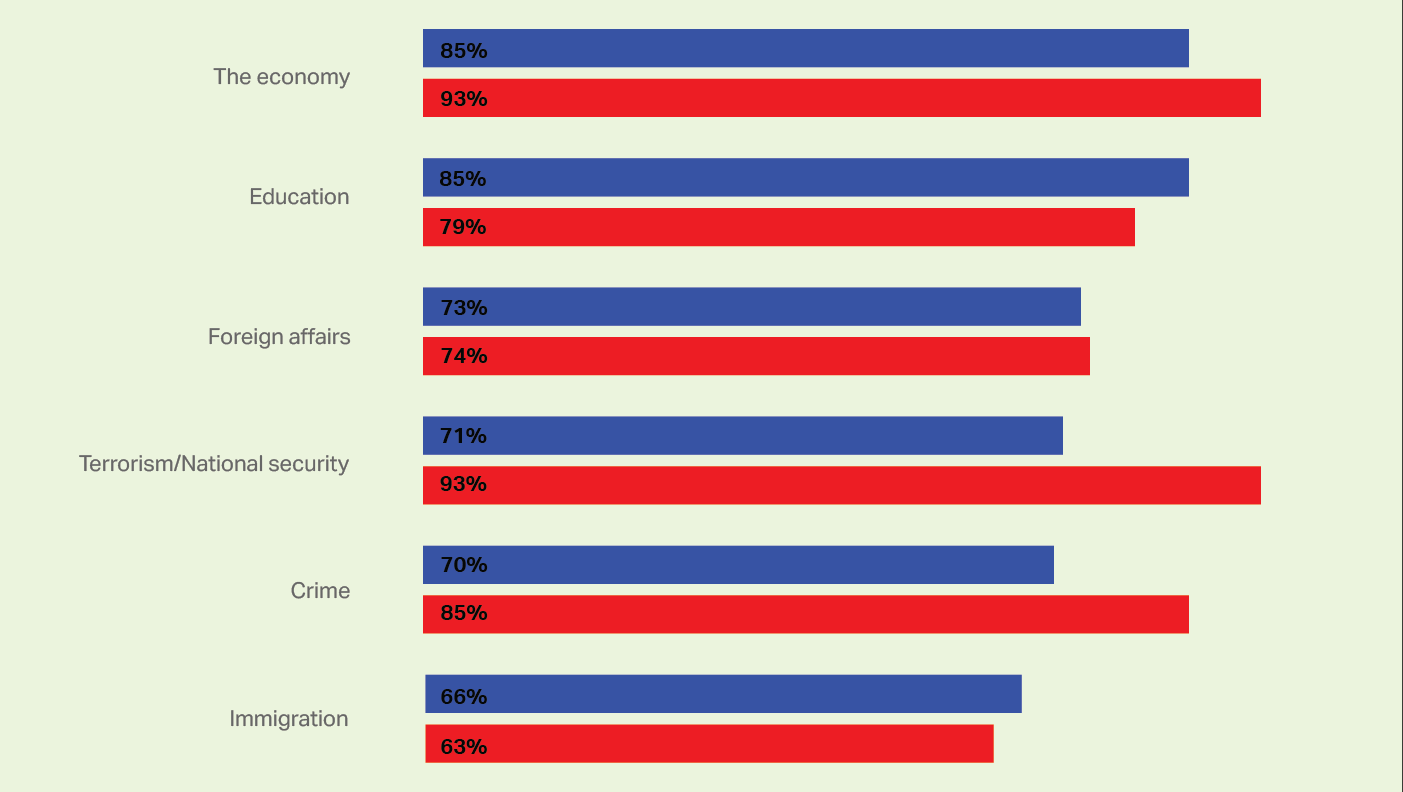
Despite media hype on issues that grab our attention the economy remains the number one political issue. The problem is that our elected government has no control over the economy. Our economy is controlled by massive corporate monopolies who also control our public policy.
There are good reasons why the economy is the number one issue, it is the issue that has the most daily impact on most American's lives. This despite the nation boasting it has 23.8 million millionaires which means roughly 1 in 15 people in the U.S. has a net worth of at least seven figures. This number includes not just tycoons but also people who have slowly built wealth through investing, homeownership, and disciplined saving. To be clear, millionaire status doesn't mean having a million dollars in cash. It's about your total net worth, which includes your financial assets like stocks, retirement accounts, and real estate, minus liabilities such as your mortgage, credit card balance, and other debts.
According to the Forbes annual list, 813 billionaires call the United States home as of 2024. That makes the U.S. the country with the most billionaires by a wide margin. Together, they hold a combined wealth of 5.7 trillion dollars. The number of billionaires continues to increase, with fortunes fueled by booming tech stocks, booming asset markets and massive share ownership.
Article I, Section 8 of the Constitution gives Congress the power to create the nation's money supply. Except for one instance (Lincoln's Greenbacks) that has never happened. Big private banks create the money supply as interest-bearing debt world-around. It is a monetary system that extracts and concentrates wealth which has been used to exploit the world's resources, take the nation to war, and rob the American people all for personal gain. Greening the Dollar is a proposal that would bring back the Greenback.
Money is society's distributive mechanism. The current money system has a problem in that it does not distribute goods and services equitably, concentrating wealth, driving exploitation, a destructive form of growth and producing excessive waste. This is due to money being privately created as interest-bearing debt for personal gain and circulating only temporarily. This creates demands for regulation and as architect William McDonough said "The need for regulation is always a sign of a faulty design." Shifting the money system design to one where money is publicly created as a permanently circulating asset issued exclusively for productive public purposes, based on the principle that anything physically possible, socially desirable and ecologically wise, would change the entire system and eliminate those systemic problems.
When they crashed the economy intentionally in 1929 broadly supported proposals emerged to change the monetary system to align with the Constitution. Nobel Laureate Frederick Soddy said money must be publicly issued for public purposes if it is to fulfill its role as society's distributive mechanism and that "to allow it to become a source of revenue to private issuers is to create, first, a secret and illicit arm of the government and, last, a rival power strong enough ultimately to overthrow all other forms of government." That is where we are and until we organize to change the money; to make it our servant instead of our master, the future will increasingly reflect the dark futures often portrayed in our science fiction.